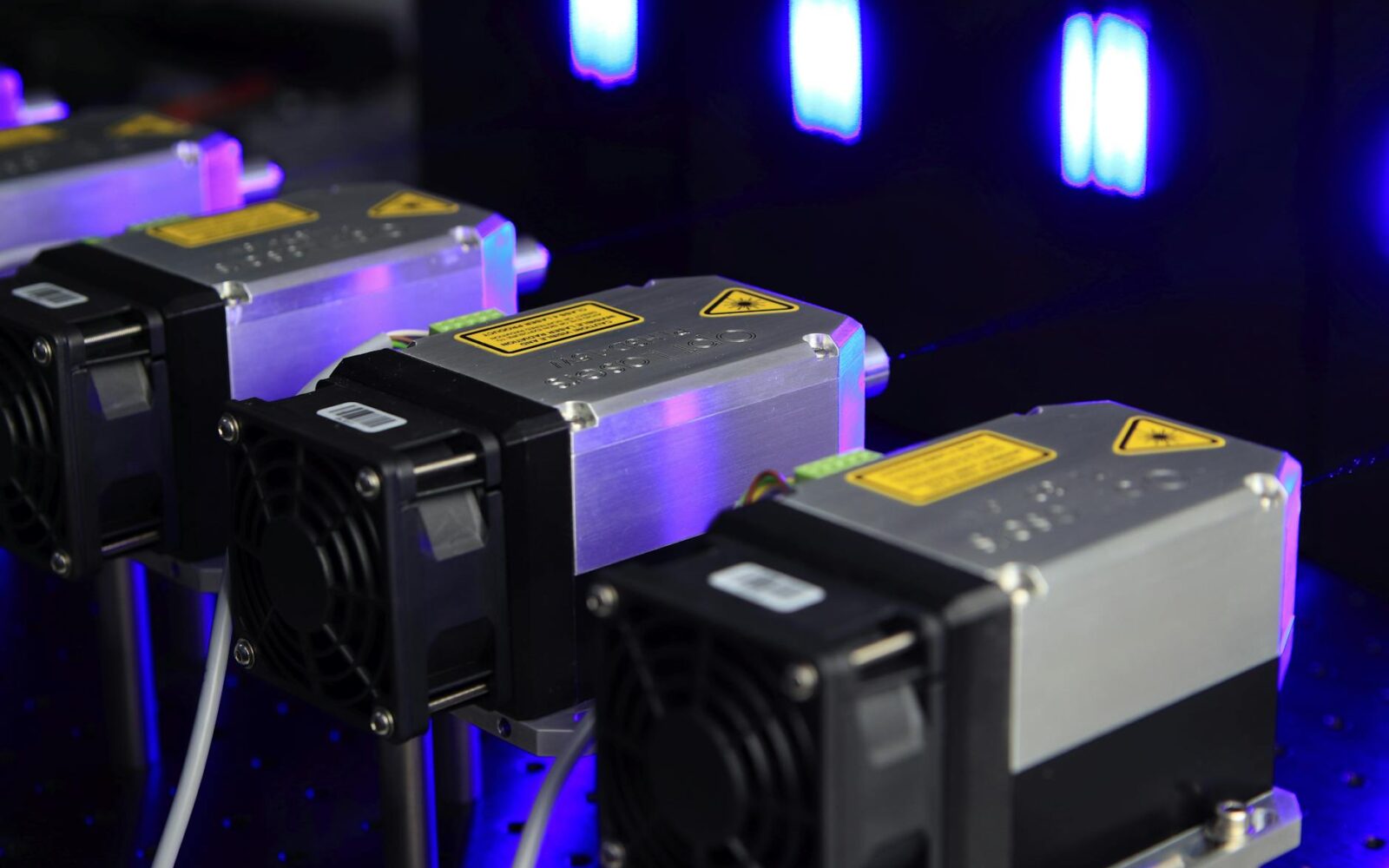
In the quest for more efficient AI infrastructure, the introduction of Lightmatter's Guide DR Laser Network Interface Card (LNIC) is a advancement. This technology achieves a remarkable fourfold increase in rack density compared to traditional external laser solutions, effectively addressing the increasing demands of AI computing environments.
The Guide DR is designed to fit within the Open Compute Project (OCP) NIC 3.0 dimensions, allowing for easy integration into existing systems. By relocating the light source from the faceplate into the chassis, this new LNIC avoids the typical scaling bottleneck associated with conventional laser configurations. Capable of delivering up to 51.2 Tbps of optical bandwidth, the Guide DR is set to enhance the performance of AI clusters, accommodating up to one thousand processing units (XPUs) and more.
As data center demands rise, space on front panels of switches and compute trays is becoming more competitive. Each new generation of accelerators and switches brings higher bandwidth and more input/output ports. Lightmatter's Guide DR tackles these challenges by providing a compact, in-chassis module that consolidates multiple lasers into a single unit, conserving valuable rack space.
A New Era of Optical Power
Nick Harris, Ph.D., the founder and CEO of Lightmatter, underscored the importance of this innovation, stating, "With Guide DR, we are removing the physical barriers to next-generation AI infrastructure by delivering the foundational laser innovation required to scale co-packaged optics." As traditional light source solutions struggle to keep up with the industry's shift from 200G ports to higher bandwidths, the Guide DR LNIC distinguishes itself by offering a high-density, liquid-cooled light source within a standard NIC form factor.
This new architecture not only meets the growing optical power demands but also boosts system-level reliability, which is essential for hyperscale operators. The Guide DR is built to support the latest high-bandwidth optical interconnects, such as the Passage® L20, allowing for greater integration flexibility in AI factories. Utilizing four Guide DR modules, a single 1 RU switch tray can achieve an impressive 204.8 Tbps of scale-up switching bandwidth, effectively eliminating the need for larger chassis configurations that are often required with traditional laser technologies.
Implications for Datacenter Efficiency
The adoption of Lightmatter's Guide DR has implications beyond performance enhancements. Christopher Taylor, Director of TechInsights, pointed out that the semiconductor industry has reached a key point where AI demands a new class of compute infrastructure that surpasses the capabilities of traditional GPUs and ASICs. He remarked, "Lightmatter’s transition to a compact, internal Laser NIC design marks a key architectural shift, boosting optical power and interconnect bandwidth while maintaining datacenter physical efficiency."
The Guide DR's specifications highlight its advantages. Each compact module can deliver 200 mW of optical power per fiber across up to 64 fibers, enabling 256 lanes at 200G each. Its zero faceplate footprint makes sure that it occupies no front-panel space, enhancing operational efficiency in OCP MHS/MGX system trays or other adaptable locations.
A Forward-Looking Perspective
As the demands on AI infrastructure continue to grow in complexity and scale, technologies like the Guide DR will be key in shaping the future of datacenter design and functionality. Packing more optical power into smaller footprints is not just about improving performance; it requires rethinking how data centers are constructed and operated. Lightmatter’s latest innovation signals a significant shift in the industry toward more compact, powerful, and efficient AI computing solutions, paving the way for the next wave of advancements in this fast-moving field.
Quick answers
What is the significance of Lightmatter’s Guide DR?
The Guide DR offers a fourfold increase in rack density, enhancing optical bandwidth for AI clusters and addressing bottlenecks in traditional laser technologies.
How does the Guide DR improve datacenter efficiency?
By relocating the light source into the chassis and utilizing a compact design, the Guide DR eliminates front-panel space requirements and supports higher optical power in a smaller footprint.
What are the key specifications of the Guide DR?
Each module provides 200 mW of optical power per fiber across up to 64 fibers, supporting 256 lanes at 200G each with a zero faceplate footprint.