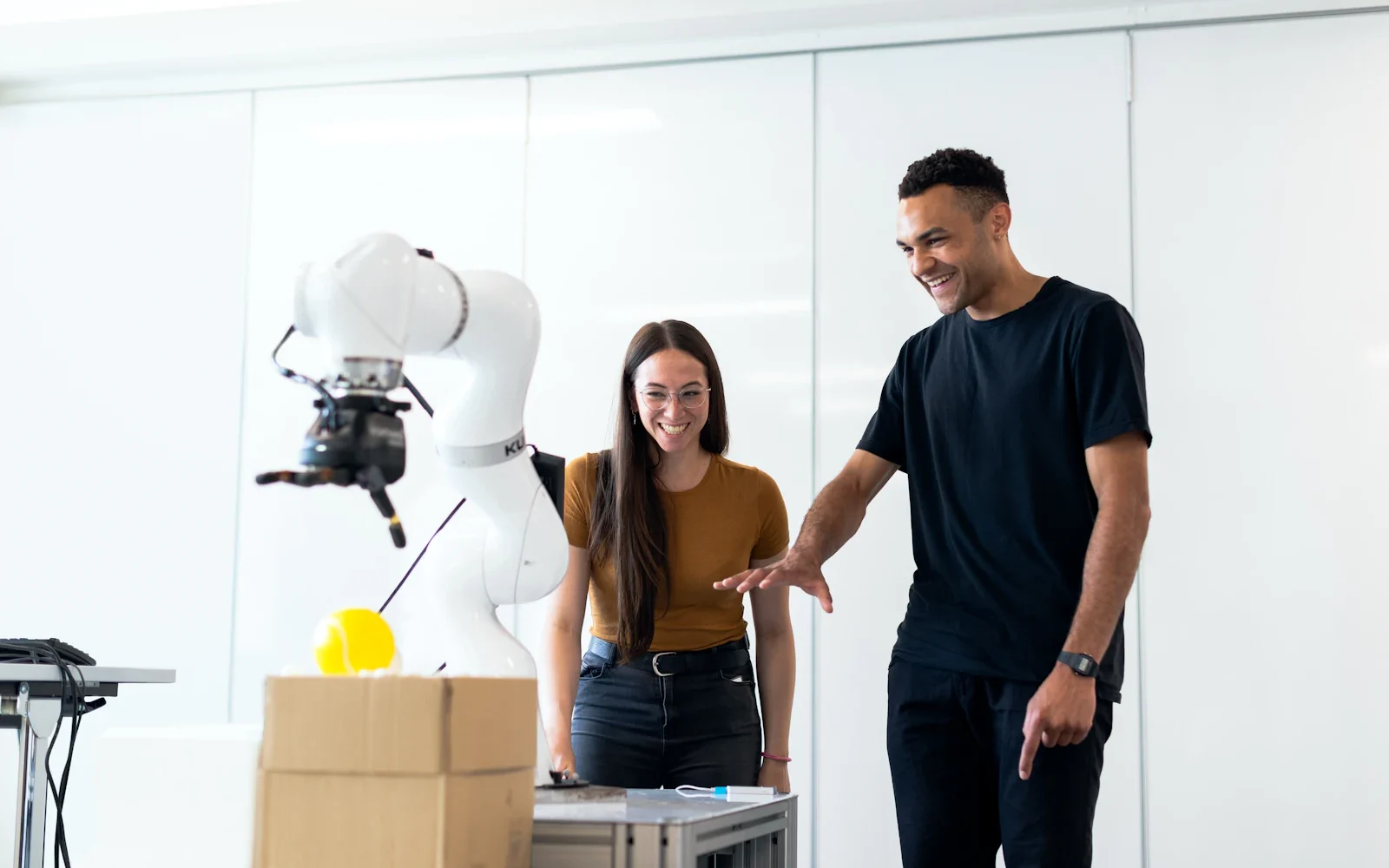
The workforce in China is undergoing a significant transformation as humanoid robots are being trained for roles typically held by humans. Kenneth Ren, a technology consultant at RealMan Intelligent Technology, shared this vision at the Humanoid Robot Data Training Center in Beijing, stating, "We are essentially teaching robots to think on their own." This initiative highlights China's goal to incorporate robotics into its workforce, moving beyond entertainment to meet practical employment demands.
A Strategic Shift
The drive for humanoid robots aligns with a broader industrial policy designed to keep China competitive in the global market. A report from the U.S. Chamber of Commerce and research firm Rhodium Group indicates this marks a notable transition from targeted sector intervention to a wide-ranging industrial strategy, dubbed an 'industrial policy of everything.' Beijing is focusing on humanoid robots alongside electric vehicles and artificial intelligence, aiming to lead in these sectors by 2030.
The training center in Beijing, backed by local government support, is one of several across the nation dedicated to preparing robots for real-world applications. Instructors like Fudi Luo, a former art teacher, are teaching robots to handle various tasks such as sorting items on factory lines, housekeeping, and metal repair. Luo explains, "At first, the robot has no awareness, so I have to control it manually. But once my movement generates data, the robot learns and then can perform the task by itself."
The Training Process
Training for these humanoid robots is rigorous. Luo notes a typical day involves eight hours of repetitive motions, which the robots can handle without fatigue. The center uses motion capture technology and controllers to guide the robots through their learning processes, requiring each robot to master multiple tasks.
Meanwhile, Beijing Inspire-Robots Technology is working on robotic hands that feature advanced motion tracking and sensory capabilities. Winston Zou, a board secretary at the company, reveals that a single robotic hand may need about 10,000 training repetitions to learn a new skill. This commitment to training reflects the ambition behind China's robotic initiatives.
Competition and Future Prospects
Elon Musk, CEO of Tesla, has recognized the competitive environment, noting that China's rapid progress in humanoid robotics presents significant challenges. In a recent earnings call, he pointed out that while Tesla's Optimus humanoid robots have superior hand designs—considered the most challenging aspect of robotics—China's manufacturing scalability could lead to stiff competition.
The deployment of these robots is not limited to training facilities. AI-powered humanoids are being tested in various roles, including chefs, bartenders, and traffic officers. Although many of these robots still require human assistance, supporters believe it is only a matter of time before they can operate independently.
Ren emphasized the purpose of the initiative, stating, "Our goal is to take on tasks that are dangerous to humans or repetitive work that people are unwilling or afraid to do. We have no intention of replacing humans in any field." This perspective reinforces a growing narrative that positions robots as enhancers of human capability rather than direct substitutes.
As China advances its humanoid robot technology, the implications for industries and the job market are significant. The country's commitment to developing autonomous robots could transform not only its workforce but also global supply chains, suggesting a future where robots play a key role in everyday tasks and operations across various sectors.